
Voice actors have legitimate grievances.
Rates have been stressed. Usage has become broader and murkier. Payment terms can stretch from inconvenient to absurd. Access to meaningful opportunities is uneven, competition is relentless, and too many companies seem to believe “in perpetuity” is a reasonable thing to request in exchange for the financial equivalent of a moderately enthusiastic grocery run.
Add artificial intelligence, unauthorized voice cloning, opaque casting systems, predatory pay-to-play models, and the expectation that talent should continuously invest in training, equipment, demos, marketing, and technology, and there is plenty worth fighting over.
None of those concerns becomes less legitimate because someone else has it worse.
But perspective still matters.
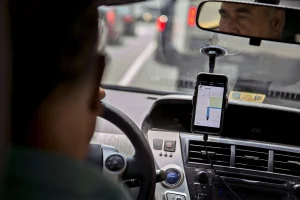
This past weekend, I got to visit with two of my favorite colleagues on a quick jaunt to Louisville and Nashville. After flying into Louisville for a dinner and unexpected graveyard tour with AJ McKay, I ordered an Uber to Nashville to meet with Kayla Jackson the next day. My driver was a disabled veteran. He was thoughtful, capable, and easy to talk to, and over the course of the trip we discussed the economics of what he does.
He was being paid approximately $185 for the ride. He told me Uber had taken roughly half of what I paid.
That $185 represented three hours driving me to my destination…..and, in all likelihood, another three hours driving home without a passenger. Six hours of his time. Gas. Taxes. Maintenance. Depreciation. All the invisible little expenses that quietly nibble away at the number displayed on the screen.
Still, he was thrilled.
It was the best fare he had ever received. It clearly made his day.
As we approached my destination, his phone offered him another ride for $15. He laughed, and I assumed the laugh was derisive. Fifteen dollars after what he had just earned? Surely he was amused by the absurdity of it.
I was wrong.
“Can’t pass that up,” he said as he accepted it.
The pickup location could have been as far as ten miles from where he dropped me. He would drive that distance, collect the passenger, complete the trip, and receive $15 before accounting for gas, taxes, vehicle wear, and the value of his time.
And he was genuinely happy to get it.
After three hours with me and a three-hour unpaid return still waiting, a day totaling roughly $250 before expenses was going to make his week.
That stayed with me.
In voiceover, we sometimes discuss a $250 job as though it were beneath consideration. Depending on the usage, client, market, and rights being requested, it may well be. A few hundred dollars is not automatically a fair rate simply because the session itself is short. We are being paid not only for minutes behind the microphone, but for our skill, training, equipment, availability, performance, and the commercial value of our voice.
We should understand that value. We should defend it.
But we should also understand our position in the larger solopreneur economy.
Many voice actors have the ability to earn several hundreds or thousands of dollars—or considerably more—for work completed from a home studio in under an hour. That possibility is not universal, consistent, or guaranteed. Building a career capable of producing those opportunities may require years of labor and substantial investment.
It is nevertheless a form of privilege.
That word should not make us defensive. Privilege is not an accusation, and gratitude is not surrender. Recognizing that we occupy a comparatively fortunate corner of the freelance economy does not require us to accept exploitation. It simply asks us to look beyond our own tiny professional ecosystem occasionally.
Other creatives often work longer for less. So do photographers, musicians, editors, writers, actors, designers, delivery drivers, and countless independent contractors whose expenses are every bit as real as ours. Many have no agents negotiating for them, no established rate guides, no residual structures, and no industry community loudly insisting that their labor has value.
This is not an argument for lowering voiceover rates. The existence of worse exploitation elsewhere does not justify exploitation here.
It is an argument for awareness.
We can advocate for better rates without behaving as though every imperfect opportunity is an insult. We can criticize unfair systems without losing sight of how extraordinary it is to make a living with our voices. We can fight for transparency, consent, access, and appropriate compensation while remaining generous toward people whose working lives operate on far thinner margins.
Perhaps it should also influence how we treat the people we hire, tip, mentor, or encounter during the day. Perhaps it should make us more honest when discussing this career with newcomers…….not only about its difficulty, but about the remarkable upside available to those who succeed.
I still believe voice actors should push for better. Better rates. Better protections. Better contracts. Better access. Better behavior from the companies profiting from our work.
I also expect I will remember that driver for a long time.
I will remember the best fare he had ever received. I will remember the six hours behind it. And I will remember the genuine delight in his voice when a $15 offer appeared on his screen.
Advocacy and gratitude can coexist.
One keeps us from being exploited.
The other keeps us from becoming insufferable.